

Around 1.5 Years ago, my daily work still looked like classic software engineering.
I was building Golang microservices, working on React and Next.js frontends, deploying workloads to Kubernetes and OKD, debugging APIs, and thinking about scaling, stability, and delivery.
That work is still valuable. In fact, it matters even more now.
But something changed very quickly.
AI stopped feeling like a side topic. It started showing up in product discussions, experiments, client expectations, and eventually in real production use cases. What first looked like hype slowly became impossible to ignore.
At the beginning, I thought:
"AI is just another tool to help me code faster."
After spending more time with it, I realized something bigger:
AI is not just another tool. It changes how we design software.
The Turning Point
My turning point was not a single dramatic moment. It was a series of small realizations.
I started joining AWS training, Alibaba partner training, and Google Cloud sessions related to AI. The more I learned, the more I got involved in AI-related projects.
What surprised me was this: I did not need to become a full-time researcher to start building useful AI systems.
I did not come from a machine learning background. I was not deeply experienced in Python. I was not a data scientist.
But I already had strong engineering fundamentals:
- breaking down problems
- designing systems
- integrating services
- building reliable workflows
- thinking about production readiness
That foundation made the transition easier than I expected.
I may not know every theoretical detail behind machine learning, but I can build practical generative AI systems that solve real problems. And in many companies, that is exactly what is needed.
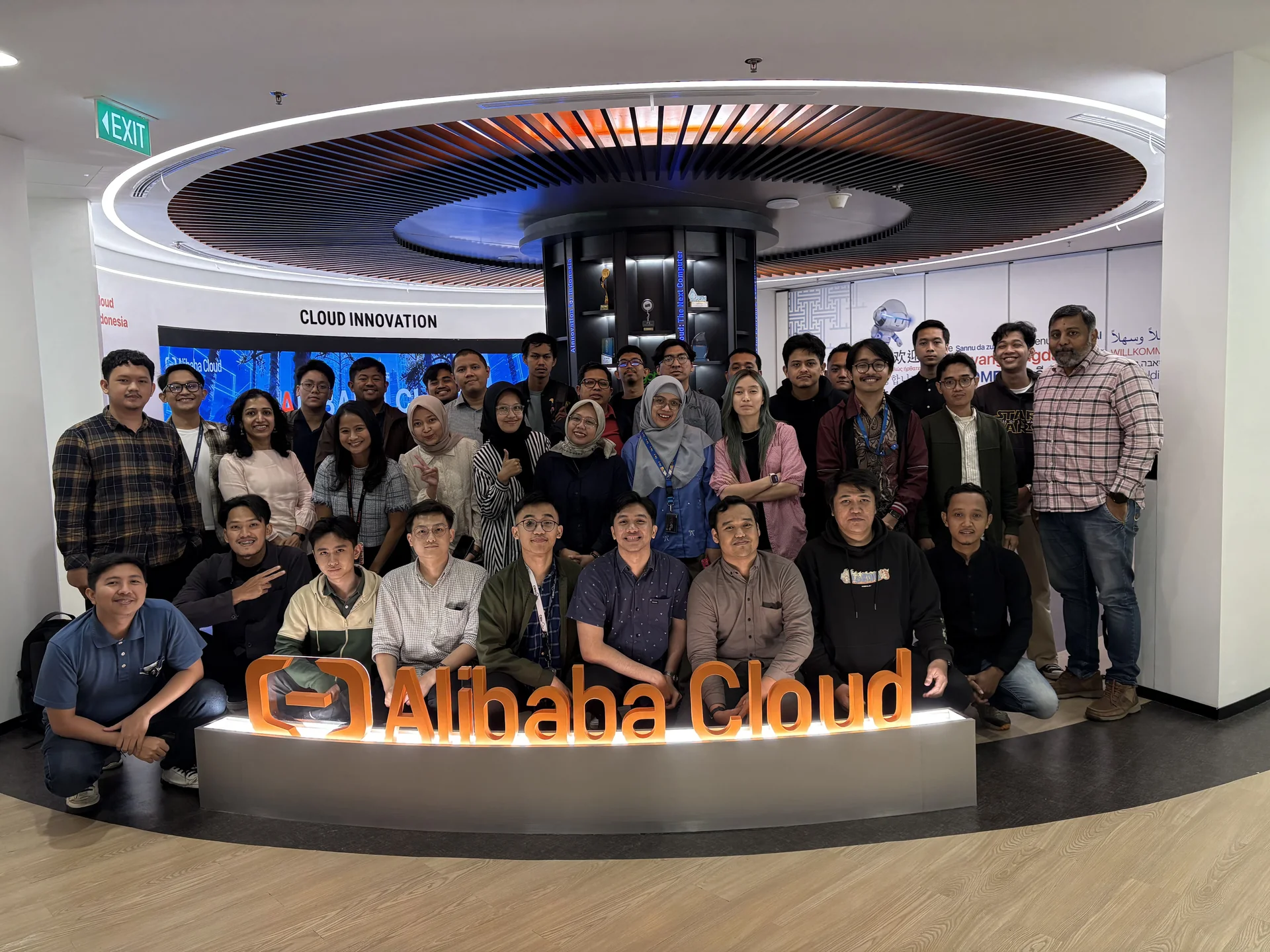
Training with the partner of my company
What Actually Changed in My Mindset
The biggest shift was this:
Before, I mostly wrote explicit logic. Now, I also design behavior.
Traditional software engineering usually means we define every rule step by step. We write conditions, flows, validations, and deterministic logic.
With AI systems, some of that logic moves into prompts, context, memory, retrieval, tool usage, and guardrails.
That means the job changes.
We are not only writing code anymore. We are:
- designing instructions
- shaping context
- connecting tools
- controlling failure cases
- evaluating outputs
- improving reliability through iteration
In other words, we are engineering intelligence, not just features.
What I’ve Actually Built
This part made everything feel real for me. I did not want to only watch tutorials or talk about trends. I wanted to embed AI into actual systems.
1. AI Agents and Prompt-Driven Systems
One of the first ideas that changed my perspective was building systems where behavior is not fully hardcoded.
Instead of defining every path manually, I built AI-driven flows where:
- prompts define the role and behavior
- the model decides the next step based on context
- the system can adapt to different inputs dynamically
At first, this feels strange for engineers because it is less deterministic than normal backend logic. But once you understand how to set boundaries and give the model the right context, it becomes extremely powerful.
The key lesson: a good agent is not "just a prompt." It is a prompt plus system design, constraints, tools, and evaluation.
2. RAG-Based Chatbots
I also worked on chatbots powered by retrieval-augmented generation (RAG).
This was important because most useful business chatbots cannot rely only on a model's general knowledge. They need access to internal documents, policies, FAQs, product knowledge, or company data.
So the workflow becomes:
- ingest knowledge sources
- chunk and index documents
- retrieve the most relevant context
- ask the model to answer using that context
This makes the chatbot far more grounded and practical.
It is no longer just a chatbot for conversation. It becomes a system for answering real questions with relevant knowledge.
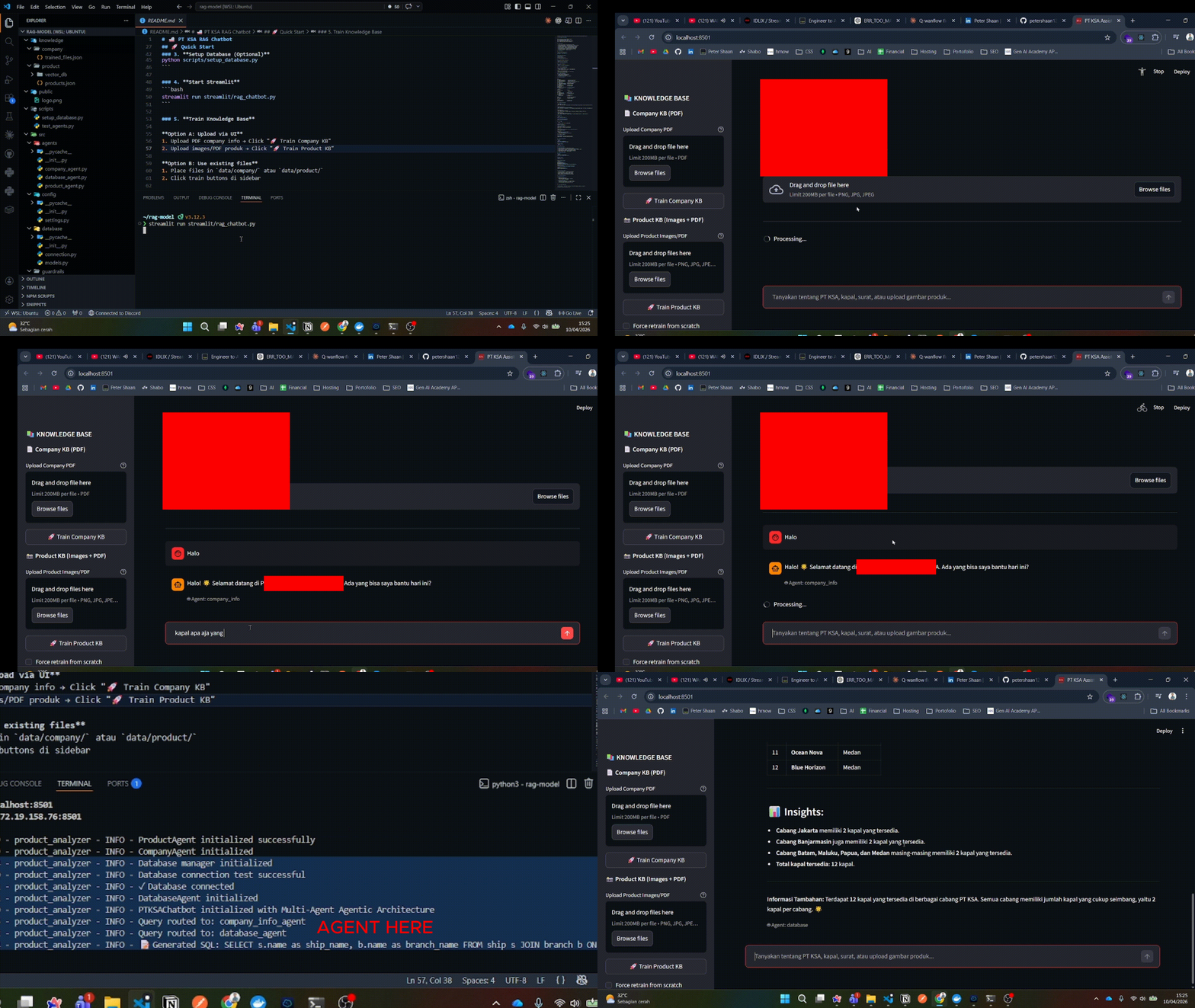
Demo chatbot with RAG and also Database Query.
3. AI + Code Execution
This is where things got really interesting.
I built flows where AI does not only respond with text, but can also:
- analyze a problem
- generate Python or Node.js code
- execute the code
- return the result
That changes the role of AI completely.
Instead of being only an assistant that "suggests," it starts acting like an operator that can perform tasks. Of course, this must be controlled carefully with sandboxing, validation, and guardrails. But the pattern is powerful.
When AI can reason, call tools, and execute code, the system becomes much more than a chatbot.
4. Browser Automation with AI + Selenium
Another interesting area was combining AI with browser automation.
I experimented with workflows where AI could:
- navigate websites
- fill forms
- extract information
- handle multi-step browser tasks
- support difficult flows that normally require manual work
This opened my eyes because it showed that AI is not limited to text generation. It can interact with interfaces, automate repetitive tasks, and connect digital workflows together.
That is where the concept of "AI agent" starts to feel concrete, not just theoretical.
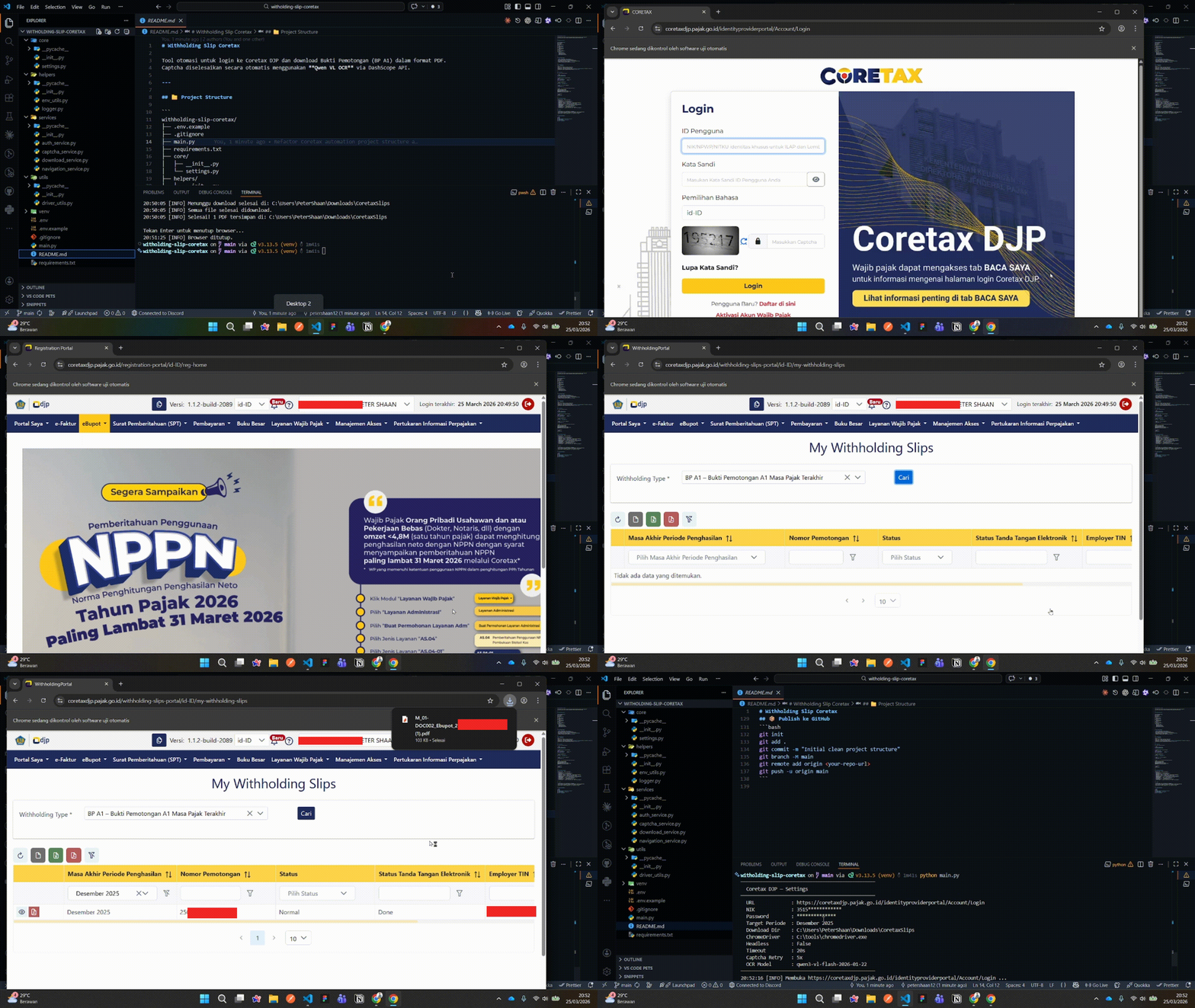
Demo AI + Selenium for browser automation. and captcha using ai
5. AI Document Analysis
Inside enterprise systems, I also worked on document-related AI use cases such as:
- OCR pipelines
- document understanding
- structured field extraction
- summarization and insight generation
This area is especially valuable because businesses deal with documents everywhere: invoices, forms, contracts, internal files, and reports.
When AI can help transform messy documents into structured information, the impact becomes immediately visible. It saves time, reduces repetitive work, and makes downstream systems more useful.
This is the point where AI stops being a cool demo and starts becoming business-critical.
Coding Has Changed
A simple example:
Old mindset:
if (user.role === "admin") {
  // do something
}
New mindset:
Act as an admin assistant. Validate user permissions, inspect the request context,
and decide the next safest action based on company rules.
Of course, normal code still matters. We still need APIs, authentication, databases, observability, queues, caching, and strong system design.
But now we are adding a new layer on top of traditional engineering:
- prompt design
- retrieval strategies
- tool calling
- evaluation
- output control
- fallback logic
The engineer role is expanding.
What Engineers Should Learn Now
If you are a software engineer and you want to stay relevant, here are the things I think matter most.
1. Stop Thinking "AI vs Coding"
This is the wrong mindset.
It is not about AI replacing all coding overnight. It is about AI becoming part of how software is built.
The best engineers in this era are not the ones ignoring AI. They are the ones combining engineering fundamentals with AI capability.
2. Learn Prompt Engineering Seriously
Prompting is not magic, but it is a real skill.
A weak prompt creates vague, inconsistent, and unreliable output. A strong prompt gives the model clarity, boundaries, role definition, expected format, and decision criteria.
Prompt engineering is not only about writing clever sentences. It is about designing behavior.
3. Think in Systems, Not Just Functions
Before, we often focused on isolated functions.
Now, we also need to think in workflows:
- where the data comes from
- what context the model needs
- what tools it can call
- how results are validated
- what happens when the model is wrong
This is why strong engineers still matter. AI products still need architecture.
4. Combine AI with Real Tools
The real power appears when AI can do more than chat.
For example, when AI can:
- call APIs
- read documents
- search knowledge bases
- execute code
- access databases
- control browsers
That is when it starts becoming useful in operations, internal tools, and business automation.
5. Start Small, Then Go Deep
You do not need to build a fully autonomous agent on day one.
Start with something simple:
- a small chatbot
- a document Q&A tool
- a prompt-based summarizer
- a lightweight automation workflow
Then go deeper:
- RAG
- tool calling
- agent orchestration
- multi-step reasoning flows
- evaluation and monitoring
That path is much more realistic than trying to master everything at once.
The Difference Between ML and Generative AI
Another important realization for me was understanding the practical shift from traditional machine learning to generative AI.
Previously, when people talked about AI, many engineers imagined:
- training custom models
- collecting large datasets
- tuning parameters
- long experimentation cycles
That world still exists, and it is important.
But generative AI changed accessibility.
Now many teams can create useful AI products by combining:
- foundation models
- prompts
- retrieval
- structured data
- tool integrations
- application logic
This lowers the barrier to entry for builders.
It means more engineers can participate in AI development without needing to become pure ML specialists first.
My Biggest Personal Lesson
My biggest lesson is simple:
Your engineering background is not obsolete. It is your advantage.
A lot of people are excited about AI, but many still underestimate how much solid engineering matters.
Models alone are not products. A demo alone is not a system. A prompt alone is not architecture.
What makes AI useful in the real world is still engineering:
- reliability
- integrations
- security
- scaling
- observability
- cost control
- good UX
So if you already come from backend, frontend, DevOps, or full-stack engineering, do not think you are late.
You are actually in a strong position.
Final Thoughts
We are clearly entering a new phase of software development.
Not everyone will adapt at the same speed. Some people will keep treating AI as a trend. Others will learn how to build with it and move much faster.
I do not think every engineer needs to become an AI researcher.
But I do believe every modern engineer should become AI-enabled.
Because the future is not simply:
AI replacing engineers.
The future is more like:
Engineers who know how to use AI will outperform those who do not.
If you are an engineer reading this, my advice is simple:
Start now. Experiment now. Build something small now.
Do not wait until AI becomes "perfect," because the shift is already happening.
And honestly, that is what makes this era so exciting.